
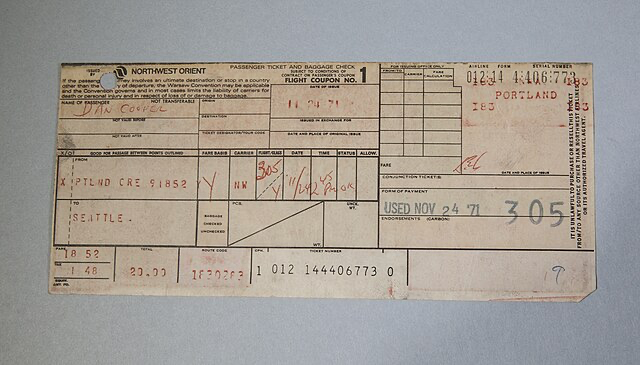
On November 24, 1971, a man who called himself Dan Cooper bought a one-way ticket for a flight to Seattle, Washington at the counter of Northwest Orient Airlines in Portland, Oregon. Just after takeoff, he handed a flight attendant a note stating that he had a bomb in his briefcase, and made demands for four parachutes and $200,000 in 20-dollar bills. This later and still to this day is one of the most enduring mysteries and unsolved plane hijacking in American criminal history.
Who is D.B. Cooper and What Happened during the Hijacking?
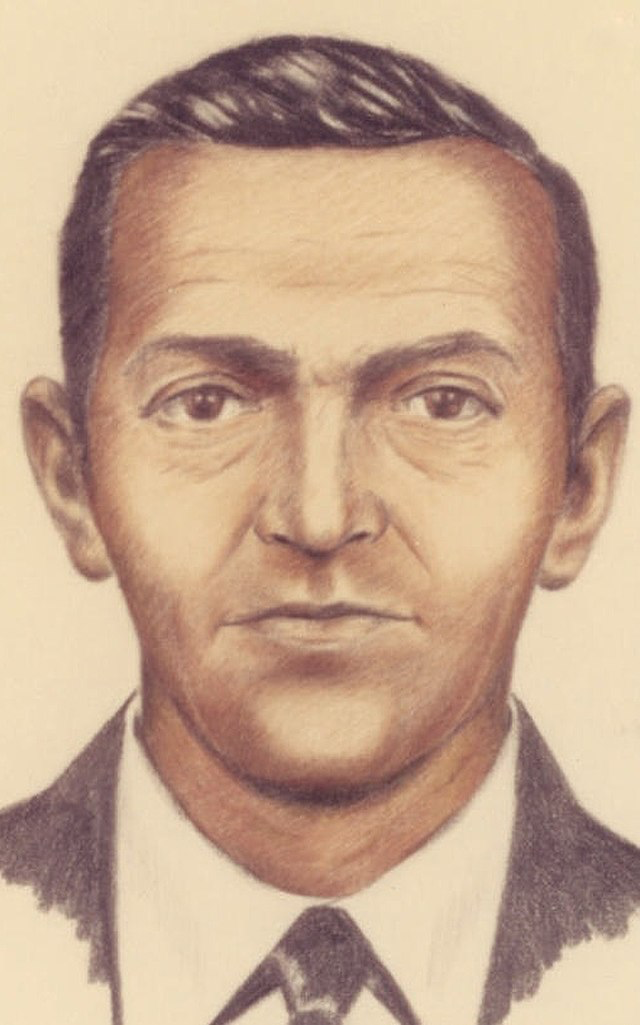
At approximately 2:50 p.m., Northwest Orient Airlines Flight 305 departed Portland for what was meant to be a routine, 30-minute flight to Seattle. On board were 36 passengers, six crew members, and the man who would later be known as D.B. Cooper. Witnesses described him as a man in his mid-40s wearing a dark suit, sunglasses, and a clip-on tie with a calm demeanor.
Shortly after takeoff, Cooper handed a note to a flight attendant indicating that he had a bomb in his briefcase and asked her to sit beside him. When she expressed doubt, Cooper opened the case, revealing red-colored sticks and wires attached to a battery. He instructed her to take his demands to the cockpit: $200,000 in cash and four parachutes. The FBI and local authorities were alerted while the plane was still in the air, and Cooper’s demands were quickly met.
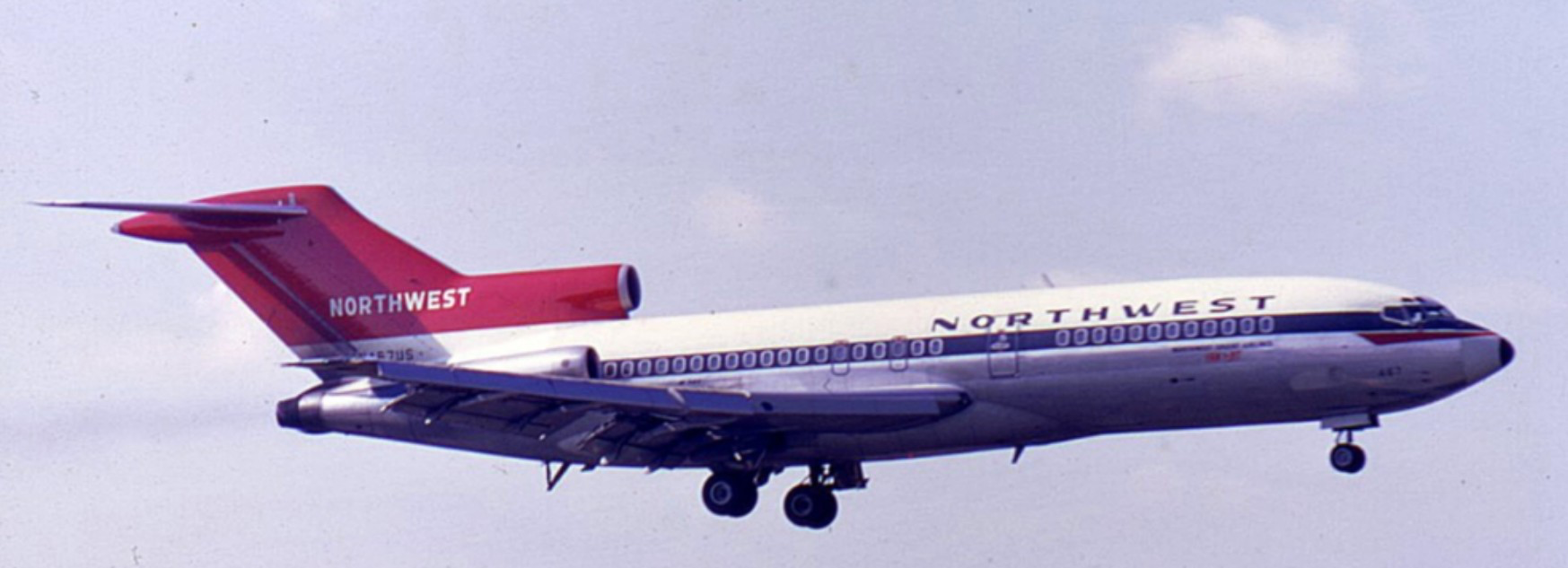
After landing in Seattle, Cooper exchanged the passengers for the ransom money and parachutes, allowing all 36 passengers to disembark safely. However, he retained the four crew members including the pilot, and ordered the aircraft to take off again on a southbound course toward Mexico City.
At 7:40 p.m., Flight 305 departed Seattle. Cooper instructed the crew to maintain a low altitude and slow speed. Somewhere between Seattle and Reno, Nevada, Cooper lowered the Boeing 727’s rear stairway. A little after 8:00 p.m., in pitch dark and heavy rain conditions, Cooper jumped from the aircraft with a parachute and carried the ransom money tied to his body, never to be seen again.
What Did Investigation Find?
The FBI became involved during the flight and opened what has now become one of the FBI’s longest cold cases in FBI history, known as NORJAK for Northwest hijacking. Led by Special Agent Ralph Himmelsbach, agents conducted massive ground and aerial searches, scouring forests, rivers, and remote terrain. Military submarines were also deployed to search nearby lakes.
Authorities interviewed hundreds of suspects across the country, including individuals with military, aviation, and parachuting backgrounds. Descriptions of Cooper varied widely. Some witnesses recalled him as over 1.83 m (6 ft) tall, others closer to five-foot-ten. Some remembered blue eyes, others brown. Despite years of effort, investigators found no body, no parachute, and no definitive trace of the hijacker.
The name “D.B. Cooper” itself was the result of a journalistic error. One of the individuals interviewed was a Portland man called D.B. Cooper. A local journalist confused this name with the alias chosen by the hijacker. When the United Press International wire service reprinted the journalist’s error, the name “D.B. Cooper” already stuck as the official alias for the hijacker.
Key Suspects Interviewed
More than 800 individuals were investigated by the FBI during the D.B. Cooper case, but the most well-known suspects include the following:
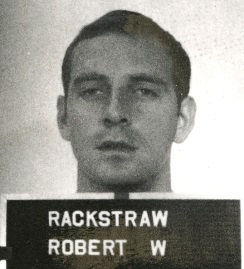
Robert W. Rackstraw
A decorated Vietnam War helicopter pilot and army veteran with specialized parachute training, Rackstraw was investigated between the 1970s and 1980s. He was eventually cleared by the FBI due to the lack of direct, concrete evidence linking him to the crime.
William J. Pratt Gossett
Gossett was a former Army Ranger and Marine with extensive parachute and survival training. According to his sons, he confessed to the hijacking and said that he possessed keys to a safety deposit box that held the money. However, the FBI never formally linked him to the case, and he was seen as an obsessive admirer of the crime.
Sheridan Peterson
An accomplished skydiver, former smokejumper, and Boeing employee, Peterson was one of the key suspects as he helped write the flight manual for the Boeing 727. He also fit the physical profile and had the necessary skills, but his DNA and fingerprint could not be found at the crime scene.
Kenneth Christiansen
Christiansen was a former Northwest Orient Airlines flight attendant and paratrooper. He purchased a home with cash shortly after the hijacking, making him a key suspect in the crime. However, he was ruled out afterwards as he was 5-foot-8 and weighed 150 pounds, making him at least 4 inches shorter and 30 pounds lighter than the physical description of D.B. Cooper.
Clues and Case Developments
Cooper reclaimed his ransom note, so investigators were unable to analyze it. However, there were a few items remaining on board, which were cigarette butts, a single hair, and the clip-on tie he removed before jumping. For decades, these items yielded little usable evidence. According to FBI files released in 2025, Cooper’s tie contained more than 100,000 microscopic particles, including rare metals such as bismuth and unalloyed titanium. This led to the speculation that Cooper may have worked in a specialized manufacturing environment, which may possibly even connect him to Boeing or the aerospace industry.
Despite early assumptions that Cooper was an experienced skydiver, later analysis suggested otherwise. The FBI concluded that experienced parachutists would not have jumped in dark conditions with heavy rain and strong wind, in loafers and a trench coat. Investigators also stated that Cooper likely worked alone, as his vague instructions and timing did not make sense for a coordinated escape.
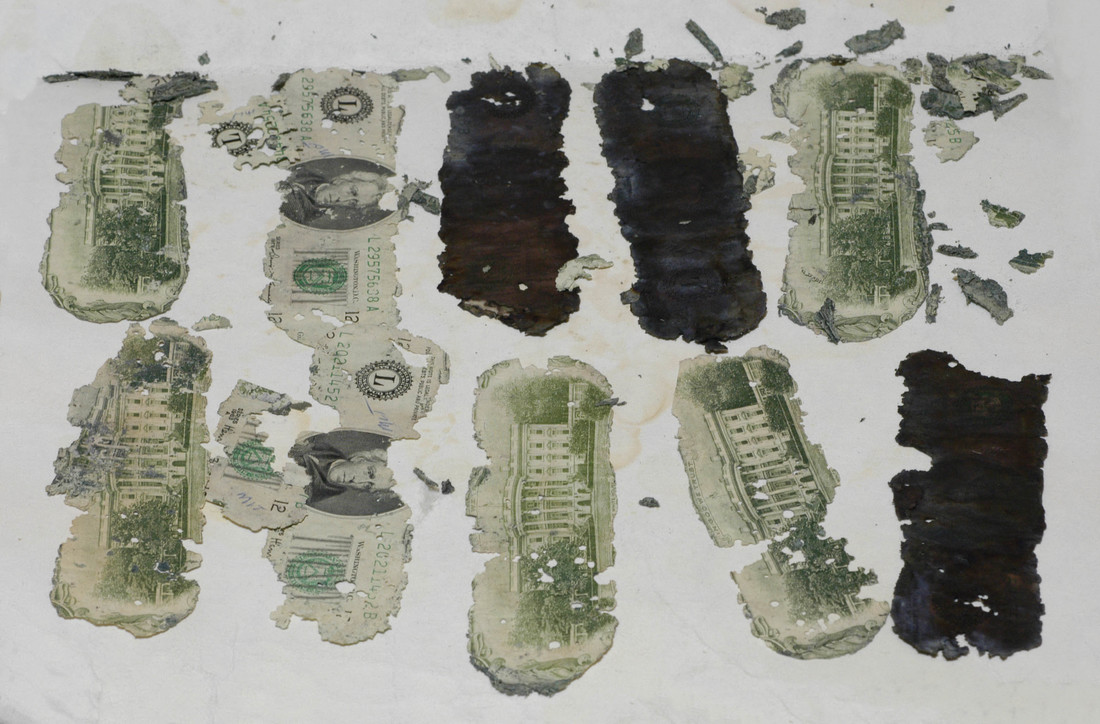
In 1980, Brian Ingram, an eight-year-old child, found $5,800 in decaying $20 bills buried near Vancouver, Washington, on the banks of the Columbia River. The money had matching serial numbers from the ransom. This discovery raised further questions, as it was unclear why Cooper would bury the money.
Aftermath and Copycat Attempts
The year 1972 which followed the D.B. Cooper hijacking saw 15 unsuccessful copycat attempts. These included Richard McCoy, Jr., Martin J. McNally and Frederick Hahneman. Despite successfully parachuting out of the aircraft after receiving payments, they were all eventually caught and punished.
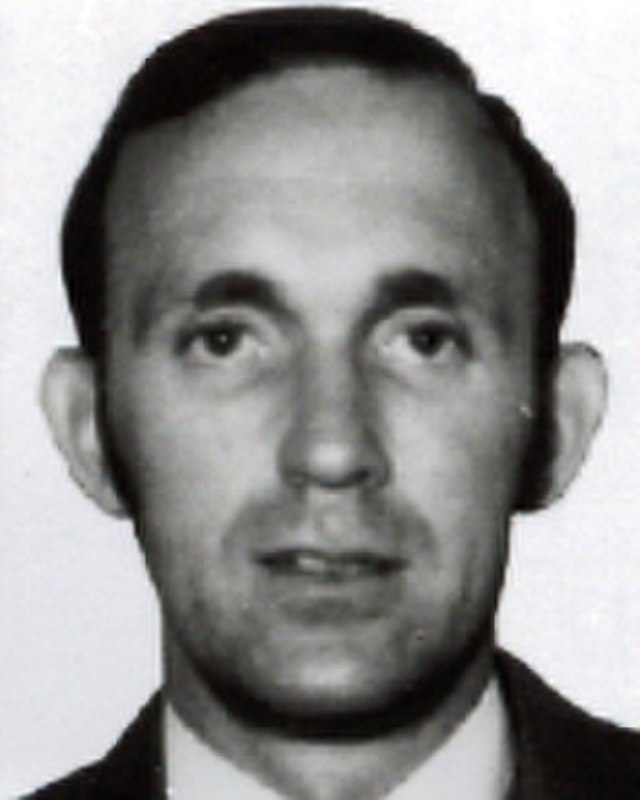
Richard McCoy Jr.
On April 7, 1972, less than five months after the D.B. Cooper hijacking, another man with a false name boarded a Boeing 727 flying from Newark to Los Angeles. Shortly after takeoff, he passed a note to a flight attendant demanding $500,000 and four parachutes, threatening to bomb the aircraft if his demands were not met. After landing to refuel, the hijacker exchanged the passengers for cash and parachutes, then later escaped by jumping from the aircraft’s rear stairs.
The hijacker was later identified as Richard McCoy Jr., a skilled skydiver and helicopter pilot. He was convicted of air piracy and sentenced to 45 years in prison, but escaped in 1974 after plane hijacking a garbage truck with fellow inmates. Three months later, McCoy was killed in a shootout with the FBI in Virginia.
Frederick Hahneman
On May 5, 1972, Frederick Hahneman, a Honduras-born US citizen, hijacked Eastern Air Lines Flight 175 on a flight from Allentown, Pennsylvania, to Miami, Florida. He was dissatisfied with the small denominations used in the ransom and demanded that the provided ransom be traded in for cash. He then parachuted from the plane over Honduras during a refueling stop in New Orleans, Louisiana. Hahneman was on the run for 4 weeks before finally surrendering to the US Embassy in Tegucigalpa.
Martin J. McNally
On June 23, 1972, Martin McNally, an unemployed service-station attendant, carried a submachine gun to commandeer an American Airlines 727 flying to Tulsa, Oklahoma from St. Louis, Missouri, then diverted it to Indiana, bailing out with $500,000 in ransom. When the 727 was preparing to take off after he had received the ransom, a local man drove his car onto the runway and hit the 727, seriously injuring himself in the collision. The collision forced McNally to switch to a second 727. Despite losing the ransom money, McNally landed safely near Peru, Indiana, and was arrested a few days later in a Detroit suburb.
Impact on Aviation Security
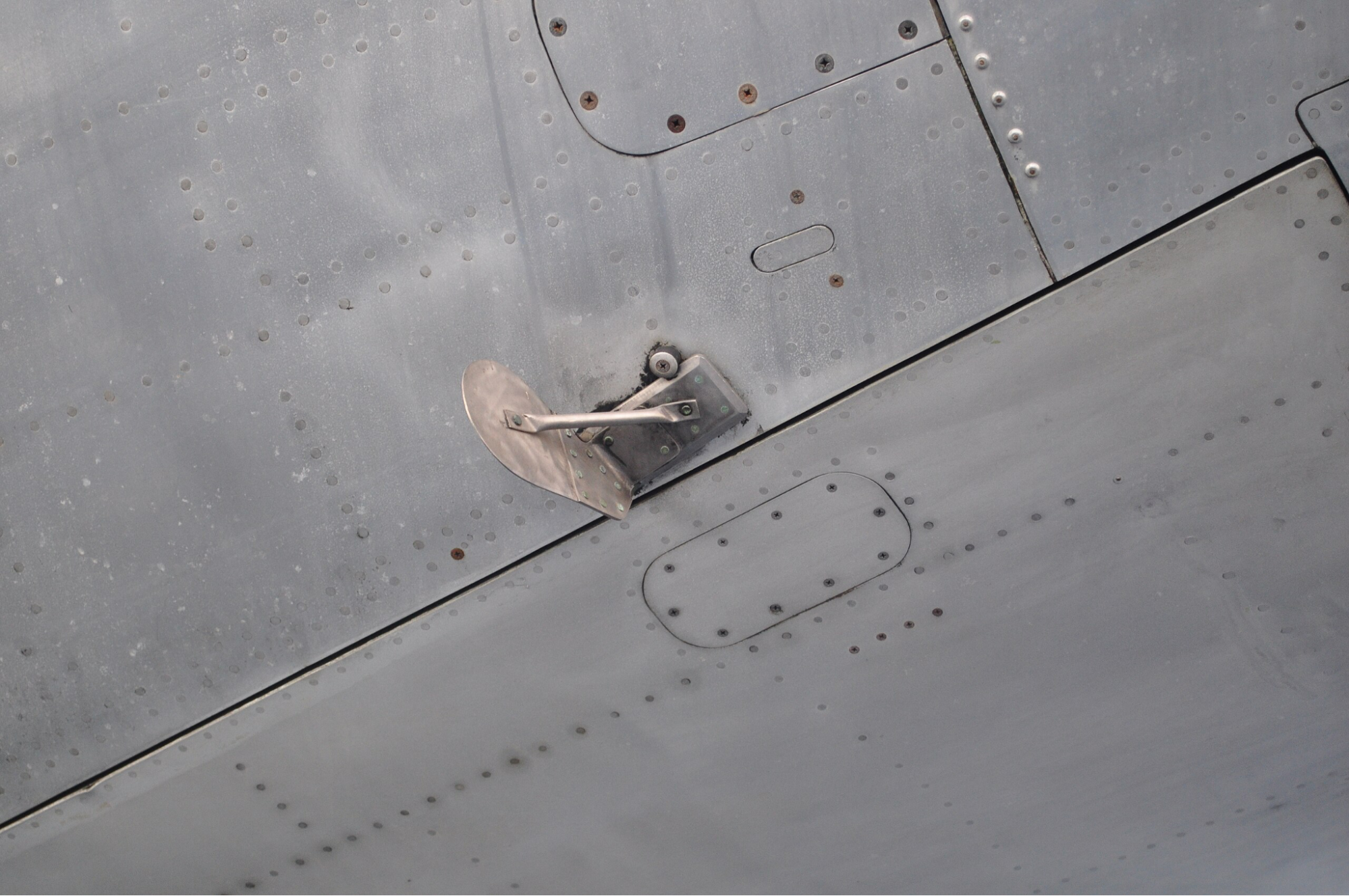
As a result of the plane hijacking, the Federal Aviation Administration ordered the installation of “Cooper vanes” for all Boeing 727 and some similar aircraft with rear stairs. These are small latches on the outside of all planes that act as a retroactive safety modification. Named after the hijacker, this installation helps to prevent anyone from opening the door mid-flight. In modern aircraft, most commercial airliners do not have rear airstairs that open in flight as they rely on jet bridges or side-door stairs, making the Cooper vane unnecessary. Additional changes followed, including cockpit door peepholes, passenger luggage screening, metal detectors, and stricter security protocols that reshaped air travel worldwide.
Final Thoughts
The mystery surrounding the D.B. Cooper plane hijacking had resulted in global attention and a manhunt that lasted decades. More than 50 years later, the identity, fate, and motives of D.B. Cooper remains unknown. On July 12 2016, the FBI officially closed this cold case, citing the need to focus on more pressing investigative priorities. While it may never be known if D.B. Cooper survived the jump or managed to escape in the wilderness, his audacious crime had permanently changed commercial aviation with stronger security measures and safety protocols that make a similar incident virtually impossible today.