
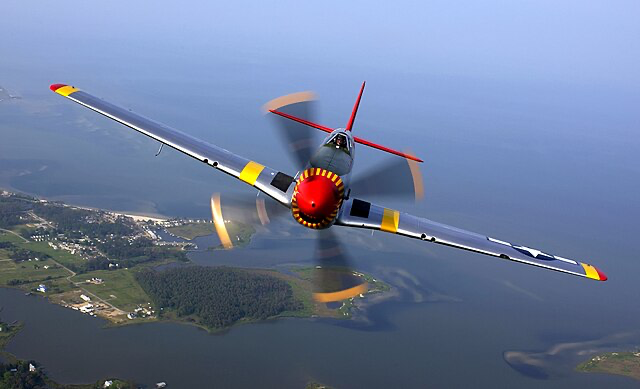
Legends of the Sky: The Most Iconic WWII Fighter Planes
During the Second World War that lasted from 1939 to 1945, various fighter planes battled for air supremacy. Engineered for exceptional speed, maneuverability, and specialized firepower, these WW2 planes pushed the limits of aviation manufacture during that era. As the war progressed, these fighter aircraft served multiple purposes, combining mobility with precision bombing capability. Their development provided significant assistance for troops on the ground, as their forward reconnaissance was especially useful in informing artillery strikes.
Long after the war, many of those planes are still remembered today for their contribution to the war. Here are some of the aircraft that have earned their place as the most iconic WW2 fighter planes.
1. Supermarine Spitfire
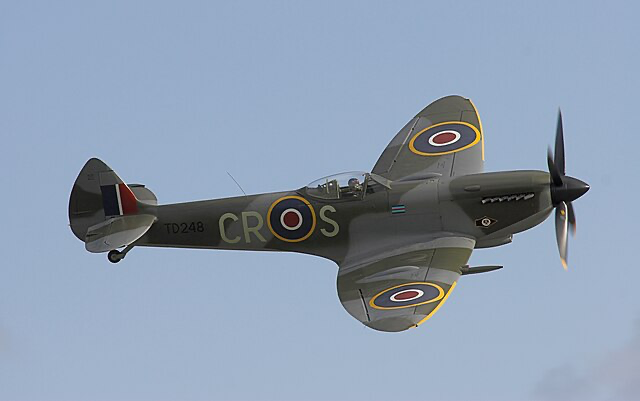
A symbol for the RAF, the Supermarine Spitfire held a critical role in WW2 to defeat Luftwaffe’s air attacks in 1940. Designed to eliminate enemy threats efficiently, the Spitfire was a short-range, high-performance interceptor known for their elliptical wing shape. First flown in 1937, over 20,000 Spitfires were built and continued to fly long after the war ended before retiring in 1961.
This WW2 fighter aircraft was considered highly modern and maneuverable for its time, with a monocoque construction and all-metal skin. As the war continued, it received many upgrades, including a Rolls-Royce Griffon engine with over 2,000 horsepower that enabled it to reach a maximum speed of 713 km/h (443 mph). From the 20,000+ Spitfires built between 1938 to 1948, around 60 are still airworthy today.
2. Yakovlev Yak-3
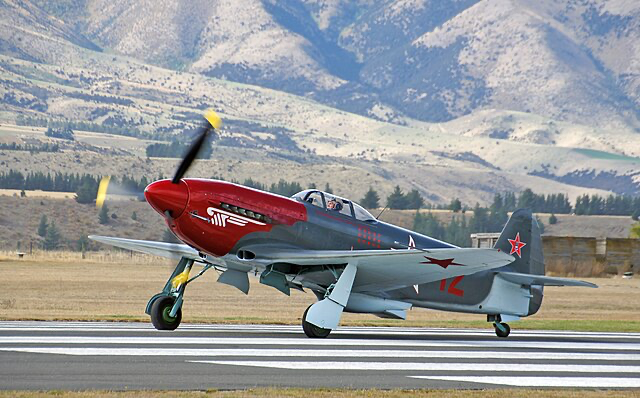
One of the USSR’s most versatile and smallest fighter aircraft of WWII is the Yakovlev Yak-3. Previously, their wooden-winged Yak-1 could not take on the Luftwaffe, and it wasn’t until the summer of 1943 that the Yak-3 started taking to the skies and became one of the Soviet Union’s best WW2 fighter planes.
The Yak-3 had an impressive power-to-weight ratio, as it is a very light aircraft able to reach a speed of 655 km/h (407 mph). Its primary armament consisted of one 20mm ShVAK cannon and two synchronized 12.7mm Berezin UB machine guns in the nose. This lightweight configuration was able to perform with high accuracy, making it highly favored over Western aircraft by the fighter squadron Normandie-Nieman group and French pilots who fought on the Eastern Front against the Germans.
Between 1991 and 2002, 21 replica Yak-3, Yak-7, and Yak-9 aircraft were built in the former USSR using original plans using American Allison or Pratt & Whitney engines. Several are airworthy and mostly in the US, with others in Germany, Australia, and New Zealand. An interesting fact is that Joseph Stalin granted the French pilots permission to keep 40 of their Yakovlev Yak-3 fighters as a gesture of gratitude and respect.
3. Messerschmitt Bf 109
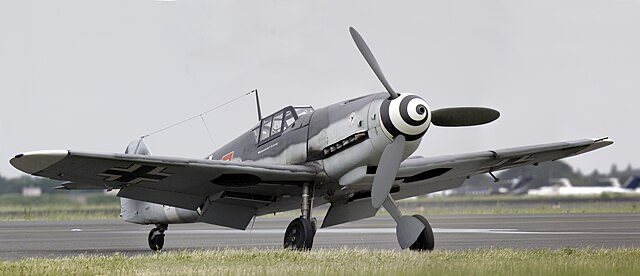
The Messerschmitt Bf 109 is one of the finest German WW2 planes in its day, considered to set the benchmark for German fighters throughout the war. With a total of 34,248 being manufactured until April 1945, this fighter plane has the most kills in history, surpassing 20,000.
Entering service in 1937, the Messerschmitt Bf 109 was recognizable for its all-metal structure and distinctive nose cone that is typically painted yellow. Its final K-4 variant, active from 1944-45, had a maximum speed of approximately 727 km/h (452 mph) at an altitude of 7,500 m (24,600 ft). It was in action during the Spanish Civil War as part of the German Condor Legion supporting Franco’s Nationalists, being active for eight years before being retired in 1945 after the defeat of Nazi Germany. Today, there are roughly less than twenty airworthy Messerschmitt Bf 109s in the world, largely based in Europe, United Kingdom and the United States.
4. Hawker Hurricane
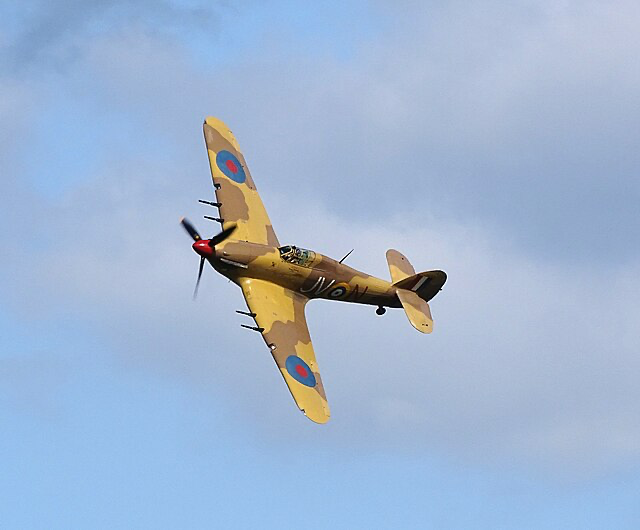
The Hawker Hurricane is a British single-seat fighter aircraft pivotal during WW2, which made up most of the Royal Air Force (RAF)’s fighter fleet. It has a light frame built primarily from a wooden box girder, supported by high tensile steel and duralumin. Although it served multiple purposes during the war, its main intention was to be a dogfighter against the German Messerschmitt Bf 109, where the Hurricane was aided by the Supermarine Spitfire.
Equipped with the legendary Rolls-Royce Merlin engine, the Hurricane was able to reach a maximum speed of 526 km/h (327 mph) with a flight ceiling of 10,668 m (35,000 ft). As the German’s WW2 plane, the Bf109s, could outperform the Hurricane, technical improvements were made to this aircraft, enabling them to force the Germans into survival mode. There are now only 12 Hawker Hurricanes in flyable condition worldwide, with two of them operated by the Royal Air Force and specialized heritage trusts for display.
5. de Havilland Mosquito
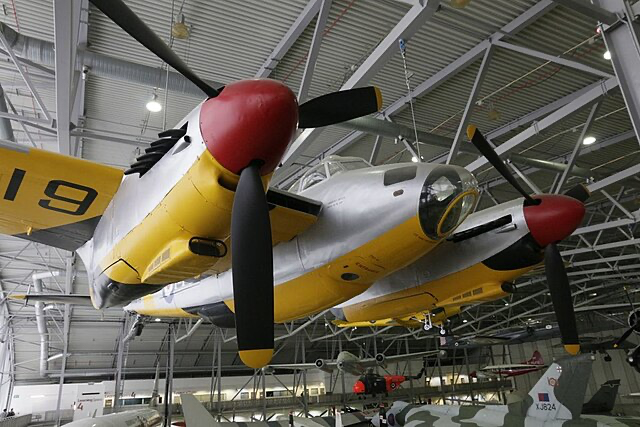
The famous British de Havilland Mosquito, often referred to as “Mossie”, was a versatile aircraft used extensively during WW2 to defend the British Isles. Entering production in 1941, nearly 8,000 of these aircraft were constructed in Great Britain, Canada, and Australia.
This twin-engine heavy night fighter was used for bombing, night fighting, as well as reconnaissance.It was also equipped with advanced Airborne Interception (AI) radar systems. Constructed mostly of plywood, it could achieve a high speed of 644 to 684 km/h (400 to 425 mph). Its Rolls-Royce Merlin engines also enabled it to reach high altitude and range. The British has turned over more than 100 Mossies to the USAAF under Reverse Lend-Lease, retaining their British designations. Today, out of all the aircraft built, 30 survive and five are still in airworthy condition.
6. North American P-51 Mustang
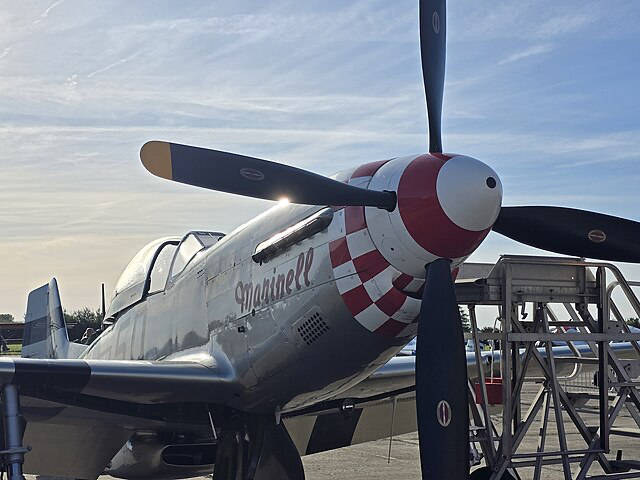
The North American Aviation P-51 Mustang is an iconic WW2 fighter aircraft that played a key role against the Axis forces. Designed in 1940 and beginning its service in 1942, it is considered one of the deadliest American WW2 planes with the most important contribution in facing American air threat.
Originally, the P-51 Mustang had limited performance at high altitudes. The British replaced its Allison engine with one from Rolls-Royce Merlin, significantly enhancing its performance, with a maximum speed of 703-708 km/h (437–440 mph) at 7,620 m (25,000 ft). The aircraft gave protection for B-51 bombers to attack German targets on long-range missions between Britain and Berlin.
More than 15,000 Mustangs were built, claiming 4,950 kills. Today, around 160 P-51 Mustangs are still maintained in airworthy condition worldwide, owned by a mix of private collectors, warbird enthusiasts, and specialized museums. An interesting fact is that Tom Cruise owns a vintage P-51K/P-51D Mustang fighter plane, which even featured prominently in Top Gun: Maverick.
7. Mitsubishi A6M Zero
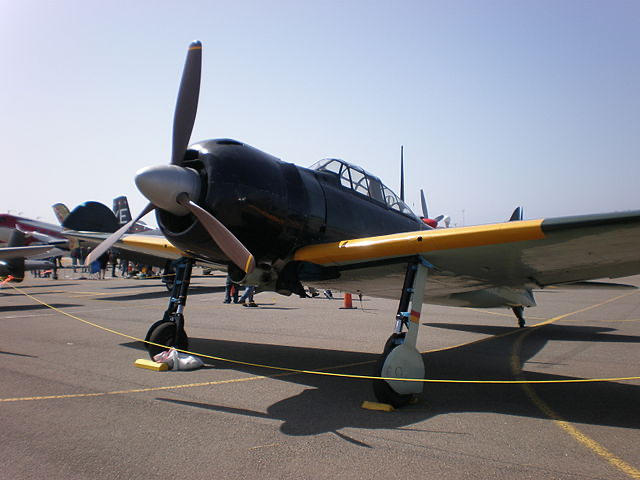
Finally, the Mitsubishi A6M Zero was considered the best carrier-based WW2 fighter aircraft. It outperformed all its American counterparts for the first few years after the US entered the war, achieving a kill ratio of 12 to 1.
As the Allies’ main opponent in the Pacific air war, the A6M was constructed to be both fast and maneuverable, with a maximum speed of roughly 508–533 km/h (316–331 mph) and a long range of almost 3106,034 km (1,930 miles). Powered by a low-powered Sakae 12 engine of approximately 940 horsepower, this carrier-borne fighter was also exceptionally light compared to its opponents.
As the Americans were eventually able to match its kill ratio by 1944, the Japanese were unable to organize upgrades as the US reached the Japanese Home Islands from aircraft carriers. Still, the Zero remained active until the very end of the war, although it was mostly used as a kamikaze weapon. There are only 5-6 airworthy Mitsubishi A6M Zeros left today. The most famous original survivor, which still uses its original Nakajima Sakae engine, is operated by the Planes of Fame Museum in Chino, California.
Final Thoughts
More than just machines of war, these WW2 fighter planes defined the pinnacle of a generation’s courage and industrial might. Each of these planes has pushed the boundaries of aviation technology to secure freedom or pursue dominance. Though the roar of their engines has long retired from the skies, their legacy endures as a timeless reminder of a pivotal era that will continue to be remembered in history.