
The aerial warfare over Ukraine is one of the largest recent conventional conflicts involving combat aircraft.
Since Russia’s full-scale invasion on Ukraine in February 2022, Ukrainian and Russian forces have employed Soviet-era jets and modern Western aircraft in a dense air-defense environment.
The conflict has generated a substantial record of how different fighter types perform under heavy missile and drone attack, and how air forces adapt when neither side can safely dominate the skies.
This article examines the main Ukrainian and Russian combat aircraft involved, their roles, documented losses, and the tactical lessons emerging from the conflict.
The Starting Point
When Russia started its invasion, Ukraine’s Air Force operated a fleet inherited from the Soviet Union. According to 2021 data, Ukraine had 43 MiG-29s, 26 Su-27s, 17 Su-25s, and 12 Su-24s in active service. These aircraft formed the core of Ukraine’s air defense and strike capability.
Operational readiness did not match the inventory on paper. Many jets required maintenance or upgrades after years of limited defense spending.
Ukraine also faced a major numerical imbalance. Russia’s air force outnumbered Ukraine’s by more than 13 to 1, with Russia fielding about 809 fighter aircraft compared to Ukraine’s 72 as of 2024.
The MiG-29: Ukraine’s Workhorse Fighter
The Mikoyan MiG-29, NATO designation “Fulcrum,” became Ukraine’s primary air superiority fighter in the early stages of the war. Designed in the late 1970s to counter Western fighters like the F-16, it is a twin-engine, lightweight fighter with good maneuverability but older avionics by current standards.
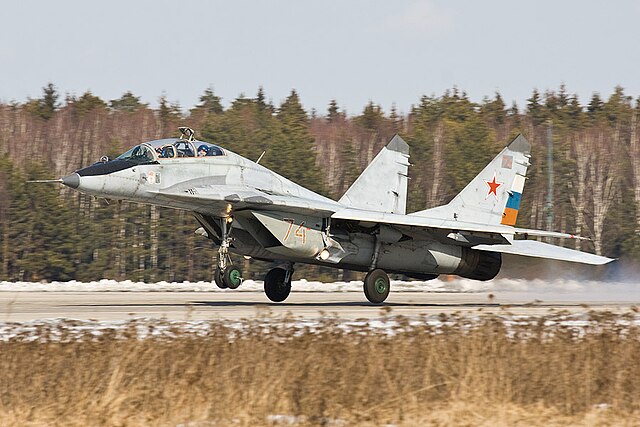
Combat performance has been significant. Reports from late 2024 indicated Ukraine lost up to 17 MiG-29 fighters in just ten days of heavy air activity. By late 2024, open-source analysts had visually confirmed at least 33 MiG-29s destroyed or damaged, with the real figure likely higher due to unrecorded or unphotographed incidents.
In combat against more modern Russian fighters, the MiG-29’s limitations became clear. Its shorter range, less capable radar, and older electronic systems put Ukrainian pilots at a disadvantage against aircraft like the Su-35, which employ more advanced sensors and longer-range air-to-air missiles.
The Su-27: Ukraine’s Endangered Heavy Fighter
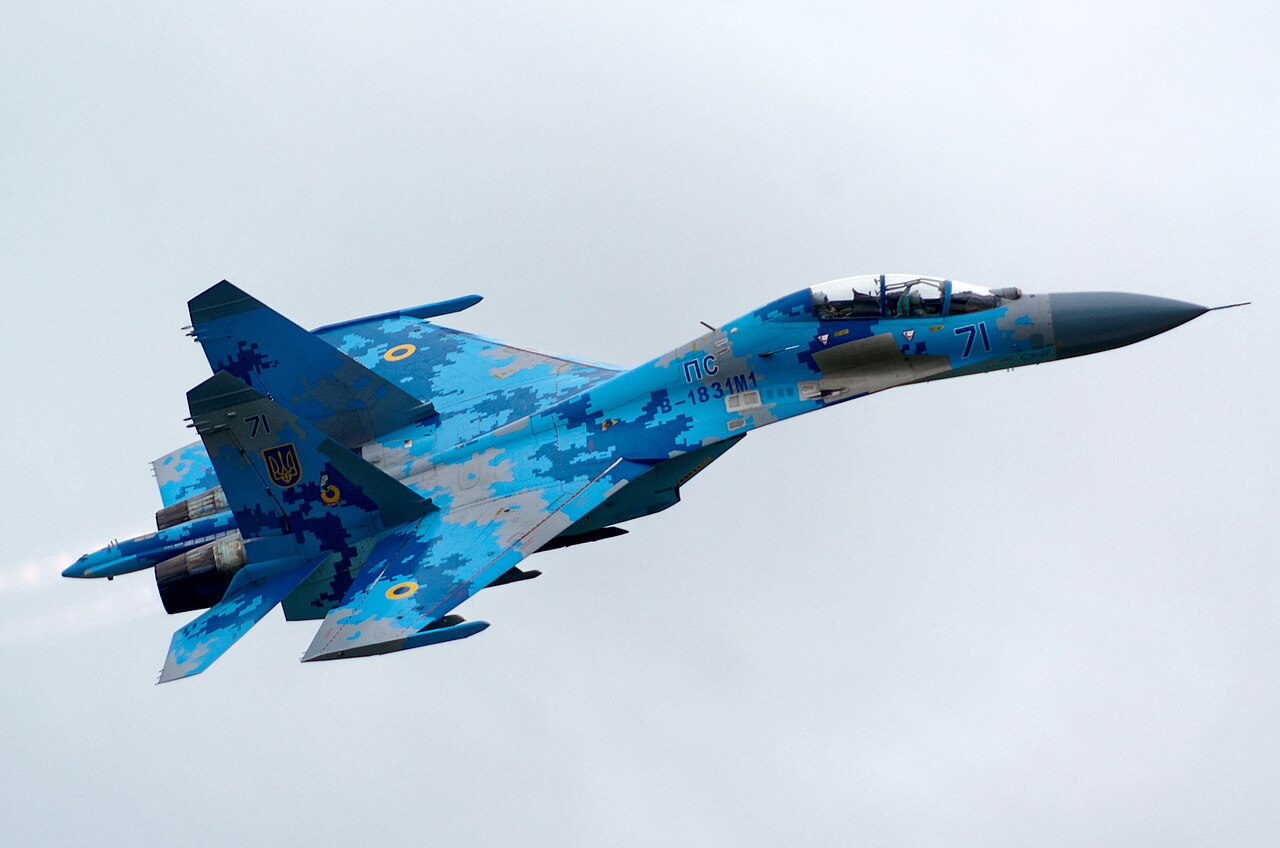
The Sukhoi Su-27 “Flanker” was Ukraine’s most capable air superiority platform at the outset of the war. Compared to the MiG-29, the Su-27 has longer range, greater payload capacity, and better endurance, making it suitable for patrolling large areas and intercepting targets at distance.
However, the Su-27 fleet was more difficult to replace than the MiG-29s. While allies could supply surplus MiG-29s, no Western country operates Su-27s that could be transferred. Ukraine’s stock of recoverable Su-27s was smaller than its MiG-29 reserves, so each loss had a greater impact on overall capability.
Losses began early. In March 2022, Russian aircraft reportedly shot down four Su-27s in a single engagement near Zhytomyr, with no Russian losses reported. The Russian fighters involved were believed to be Su-35s, which benefit from newer avionics, more capable radars, and modern air-to-air missiles.
By September 2024, Ukraine had lost at least 15 Su-27s based on open-source verification, with actual losses likely higher.
As Russian tactics shifted toward stand-off missile use and long-range strikes, the Su-27’s original strengths in long-range patrol and interception became harder to exploit without exposing pilots to dense air defenses and advanced enemy fighters.
The Su-25: Ground Attack Specialist
The Sukhoi Su-25 “Frogfoot” is Ukraine’s dedicated close air support aircraft. Designed to attack ground targets at low altitude, it is heavily armored and configured to carry a range of unguided and guided munitions, broadly similar in role to the American A-10.
Operating at low and medium altitudes brought the Su-25 into the engagement envelopes of Russian surface-to-air missile systems and short-range air defenses.
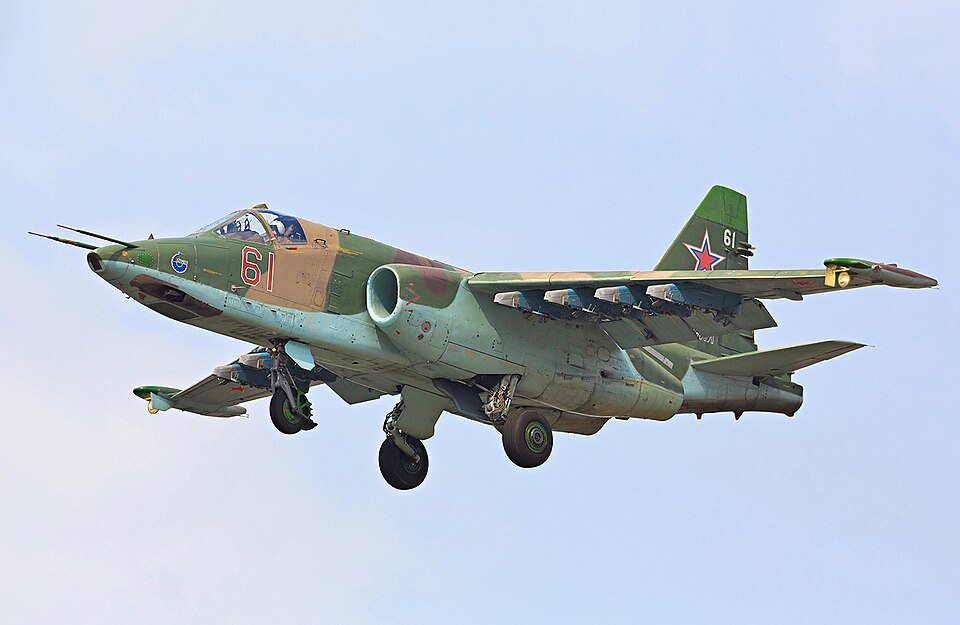
The Su-25’s protection features: armor around the cockpit and critical systems, and redundant design, allowed some pilots to return to base even after serious damage.
Over time, however, sustained operations in high-threat environments led to a gradual reduction in available aircraft through both combat damage and airframe fatigue.
Russia’s Su-35: The Flanker’s Advanced Evolution
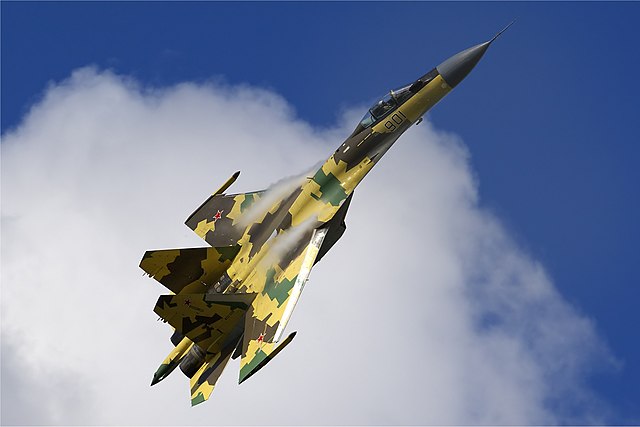
Russia has used the Su-35 “Flanker-E” extensively in the conflict. The Su-35 is an advanced derivative of the Su-27, with upgraded radar, modern avionics, and thrust-vectoring engines, and is intended to serve as a high-end air superiority and multi-role fighter.
Its performance in Ukraine has been mixed. By early 2024, Ukrainian forces had downed multiple Su-35s, including five reportedly destroyed in November 2023 and two more shot down by Ukrainian Patriot systems in early 2024. These losses reduced the aircraft’s appeal on the export market, with some potential buyers reported to have reconsidered or paused acquisition plans.
In June 2025, a Ukrainian F-16 shot down a Russian Su-35 over Kursk Oblast, reportedly using an AIM-120 AMRAAM missile with targeting support from a Swedish Saab 340 airborne early warning aircraft. The incident illustrated how Western sensors and weapons integrated into Ukrainian command-and-control can challenge Russia’s most advanced operational fighters.
The F-16: Ukraine’s Western Multi-Role Fighter
Ukraine’s acquisition of F-16 Fighting Falcons marked a key step away from an exclusively Soviet-era fleet. After lengthy negotiations and training, the first F-16s arrived in August 2024, with Belgium, Denmark, the Netherlands, and Norway together pledging more than 60 aircraft.
The F-16 brings modern radar, digital avionics, NATO-compatible weapons such as the AIM-120 AMRAAM, and integration into Western command-and-control networks, giving Ukrainian pilots better detection, situational awareness, and engagement ranges than MiG-29s or Su-27s.
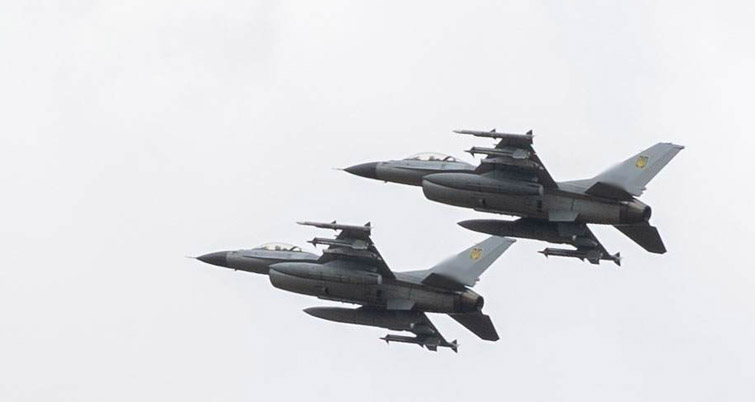
Analysts note that only a few dozen jets were expected by the end of 2024, well below the 128 aircraft President Zelenskyy has cited as necessary to seriously challenge Russian airpower, and that building training, maintenance, and logistics capacity will take years.
Ukraine currently employs F-16s mainly for air defense, intercepting cruise missiles and discouraging Russian aircraft from approaching Ukrainian airspace, rather than deep strikes into Russia.
In June 2025, Ukraine lost an F-16 and its pilot, Lieutenant Colonel Maksym Ustimenko, during a large missile and drone attack after he reportedly downed seven targets, highlighting both the jet’s contribution and the risks of these missions.
The Mirage 2000: France’s Contribution
France’s delivery of Mirage 2000 fighters added another Western platform to Ukraine’s inventory. The first Mirage 2000-5F fighters arrived in February 2025, crewed by Ukrainian pilots trained in France.
The Mirage 2000-5F is a delta-wing, single-engine fighter capable of both air-to-air and air-to-ground roles. Armed with MBDA Mica air-to-air missiles, SCALP-EG cruise missiles, and AASM Hammer guided bombs, it can contribute to both air defense and precision strike missions.
Its Thales radar provides improved target detection range and tracking compared to the older Soviet systems in Ukrainian service.
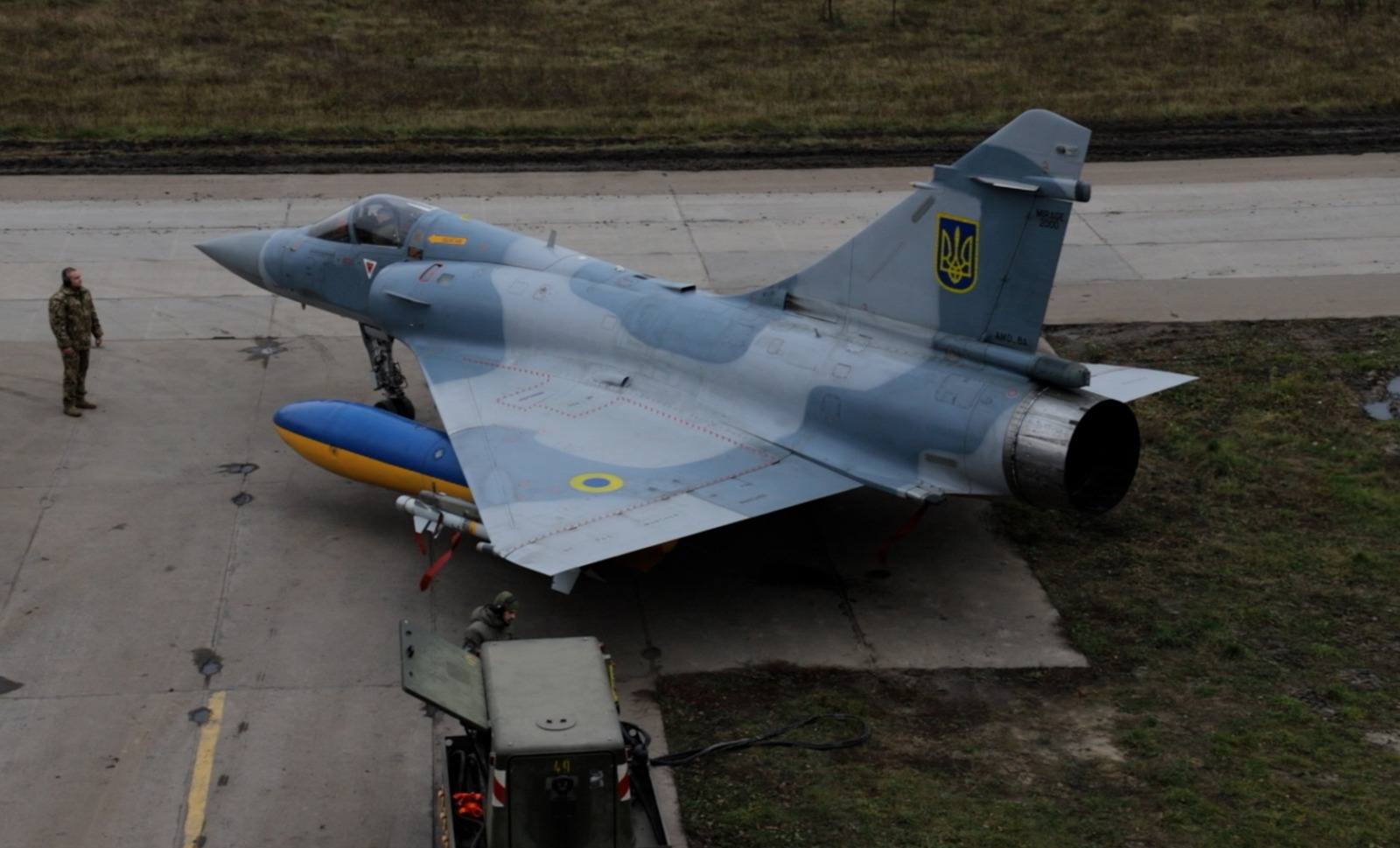
France initially committed six Mirage 2000-5F aircraft, with later reporting suggesting the total could increase to around 20. Ukraine’s first recorded Mirage combat engagement occurred on March 7, 2025, when a Mirage reportedly intercepted a Russian Kh-101 cruise missile during a large-scale attack.
Russia’s Su-30: Multi-Role Fighter
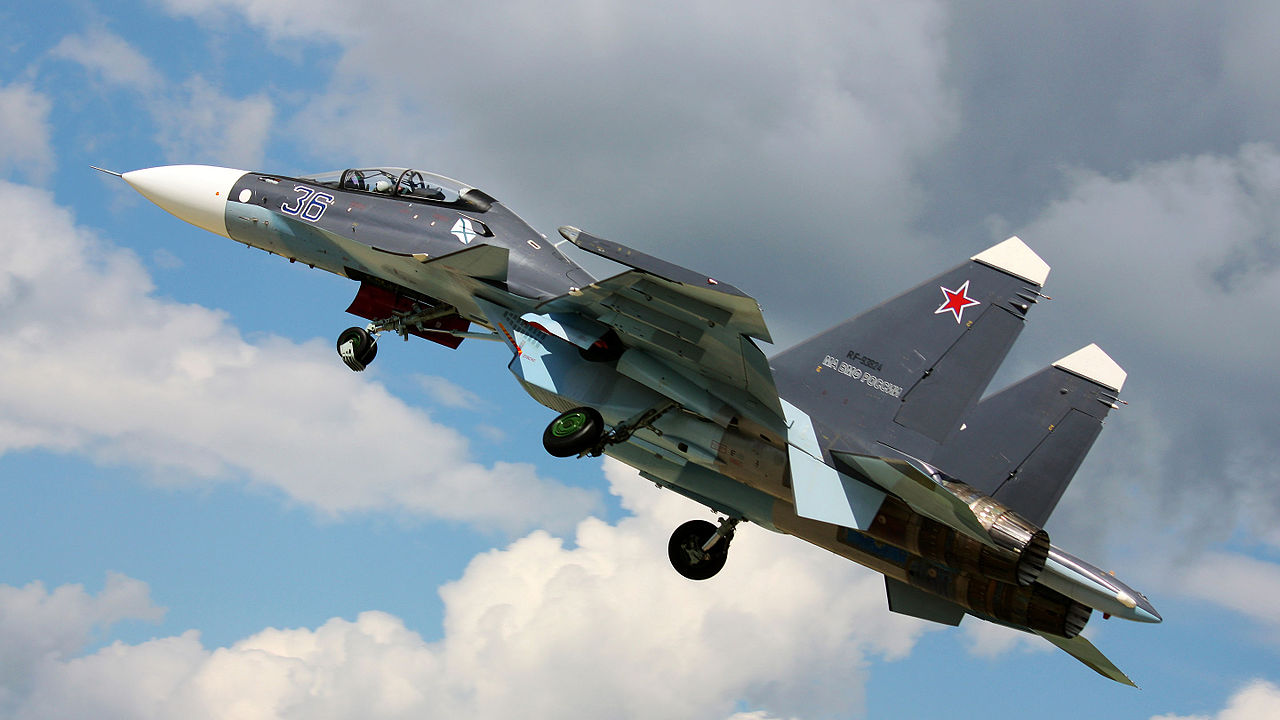
Russia has used Su-30SM and related variants alongside Su-35s for air superiority and multi-role missions. The Su-30 combines air-to-air capability with ground attack options and has been exported to several countries.
By September 2022, Su-30 and Su-35 aircraft had achieved at least seven confirmed air-to-air victories over Ukrainian fighters, plus one Ukrainian Mi-14 helicopter, based on publicly available tallies. At the same time, Su-30s have themselves been lost to Ukrainian air defenses and, in some reported cases, to Russian friendly fire.
Sanctions imposed on Russia after the invasion have complicated maintenance, particularly for aircraft that incorporate imported components. For the Su-30SM, this includes certain French-made systems, creating long-term sustainment questions as existing stocks are depleted or wear out.
Ukraine Air Force Losses
Estimating total aircraft losses on both sides is difficult. Governments restrict information for operational security reasons, while propaganda and unverified claims circulate widely. As a result, many analysts rely on photographic or video evidence compiled by open-source intelligence projects.
By October 2024, Ukraine had lost approximately 100 fixed-wing aircraft according to the Oryx blog, which documents visually confirmed losses. This tally includes at least 33 MiG-29s, 15 Su-27s, 20 Su-25s, and 19 Su-24s.
Ukraine has tried to offset these losses through a combination of foreign donations and reactivation of stored aircraft. Eastern European states supplied additional MiG-29s, while Ukraine returned mothballed Soviet-era jets to service.
Some assessments indicate that Ukraine may have fielded more operational Su-24 bombers in 2024 than at the beginning of the war due to these reactivations.
Beyond combat damage, Soviet-era fighters face structural limits on airframe life. High sortie rates (many missions in a short period of time), frequent low-level flight, and wartime stress accelerate wear and tear. Aircraft can be withdrawn from service due to accumulated flight hours and fatigue, even if they have not been directly damaged in combat.
Ukraine Air Force Wins
Despite facing a much larger and more advanced Russian air force, Ukraine has achieved several important successes in the air war. Ukrainian forces have shot down multiple Russian aircraft, including advanced Su-35 fighters, using a combination of surface-to-air missile systems and fighter jets.
Ukraine has also been effective in defending its airspace by intercepting cruise missiles and drones, reducing the effectiveness of Russian strike campaigns. These efforts have forced Russian aircraft to operate more cautiously and rely on long-range weapons instead of entering contested airspace.
Overall, while Ukraine has not achieved full air superiority, it has successfully denied Russia complete control of the skies and inflicted meaningful losses, marking a significant achievement given the initial imbalance in forces.
Looking Forward
The air war over Ukraine continues to change as new systems arrive and both sides adjust tactics.
Ukraine’s gradual shift from Soviet-era MiG and Sukhoi aircraft to Western types such as the F-16 and Mirage 2000 represents a long-term modernization of its air force, but full operational integration, including training, logistics, and command systems will take years.
Russia, meanwhile, continues to produce replacement aircraft. Public estimates suggest annual production of roughly 22–50 combat aircraft, enough to replace some losses but potentially with quality and reliability issues linked to sanctions and component shortages.
The fighting so far shows that fourth-generation fighters remain heavily used in modern high-intensity war, especially when paired with integrated air defense and networked command-and-control.
At the same time, the conflict illustrates the limits of manned aircraft in heavily defended airspace and the growing importance of long-range missiles, drones, and ground-based air defense in determining what fighters can realistically achieve over the battlefield.