
No view is quite as majestic as looking at an airplane soaring above you. What’s even more interesting is the fact that airplanes don’t just take off and fly at any height. There’s more to flying than just reaching a random height, and flying at the right range of high altitudes is fundamental for commercial aviation.
So why do commercial planes fly so high? Let us first understand the principle of flight, after which we will look into the important factors at play, including fuel efficiency and air density, as well as the importance of reaching cruising altitude.
Understanding the principle of flight
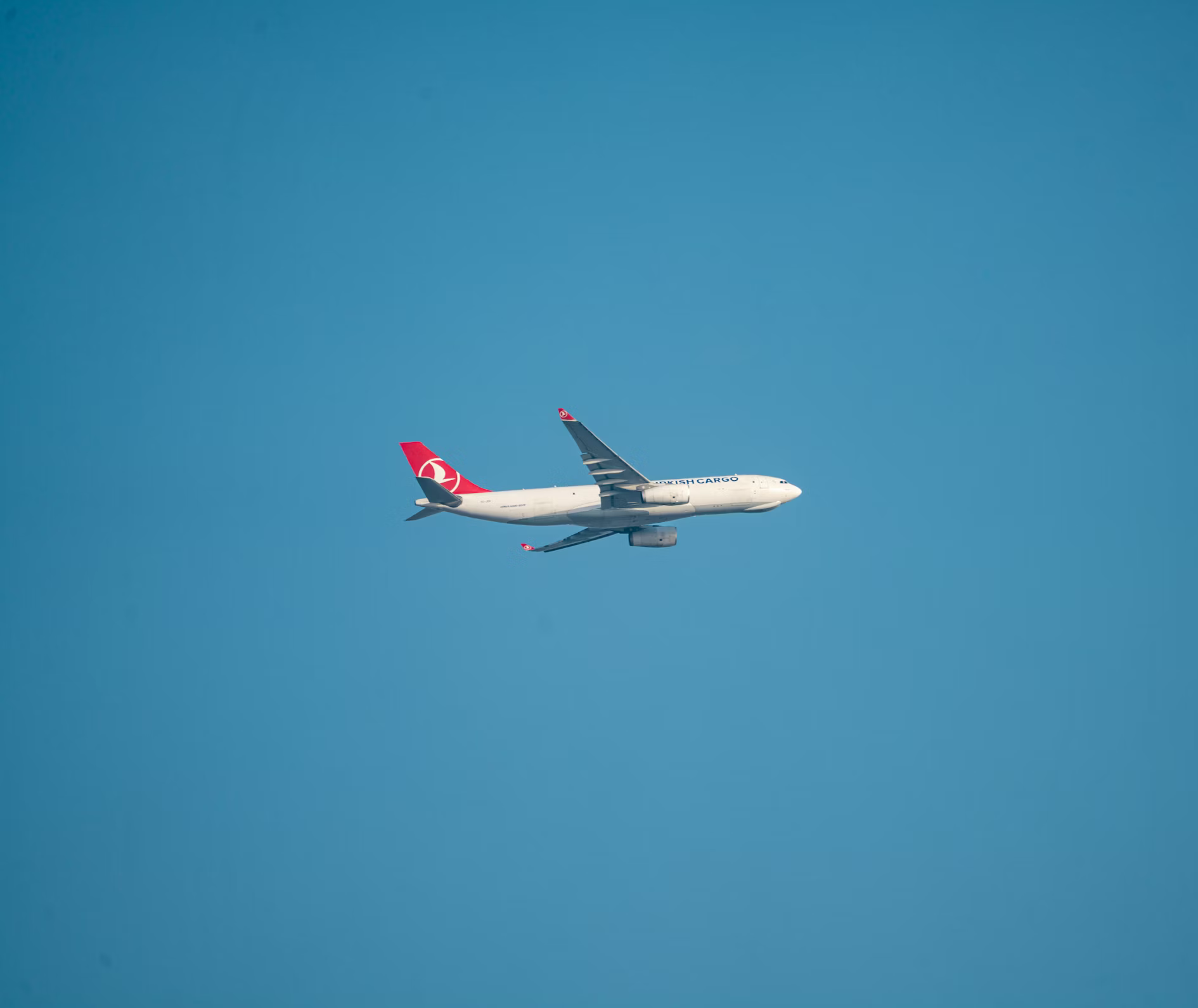
There are four fundamental forces at play during flight, namely lift, weight, drag, and thrust. These forces work together in a delicate balance to determine every plane’s trajectory.
Weight
Weight is the force of gravity that acts in a downward direction towards the center of the Earth.
Lift
Lift acts at a right angle to the direction of motion through the air. It is created by differences in air pressure.
Thrust
Thrust is the force that propels a flying machine, in this case an airplane, in the direction of motion. Planes need engines to generate thrust.
Drag
Drag is the force that acts opposite to the direction of motion, and is caused by friction and differences in air pressure.
These four forces are closely tied to an aircraft’s altitude when flying. To be able to maintain a steady, efficient flight, all four forces must be in balance. In other words, lift must equal weight, and thrust must equal drag. This equilibrium is what enables commercial planes to fly smoothly, efficiently, and economically at high altitudes.
Reaching aircraft cruising altitude
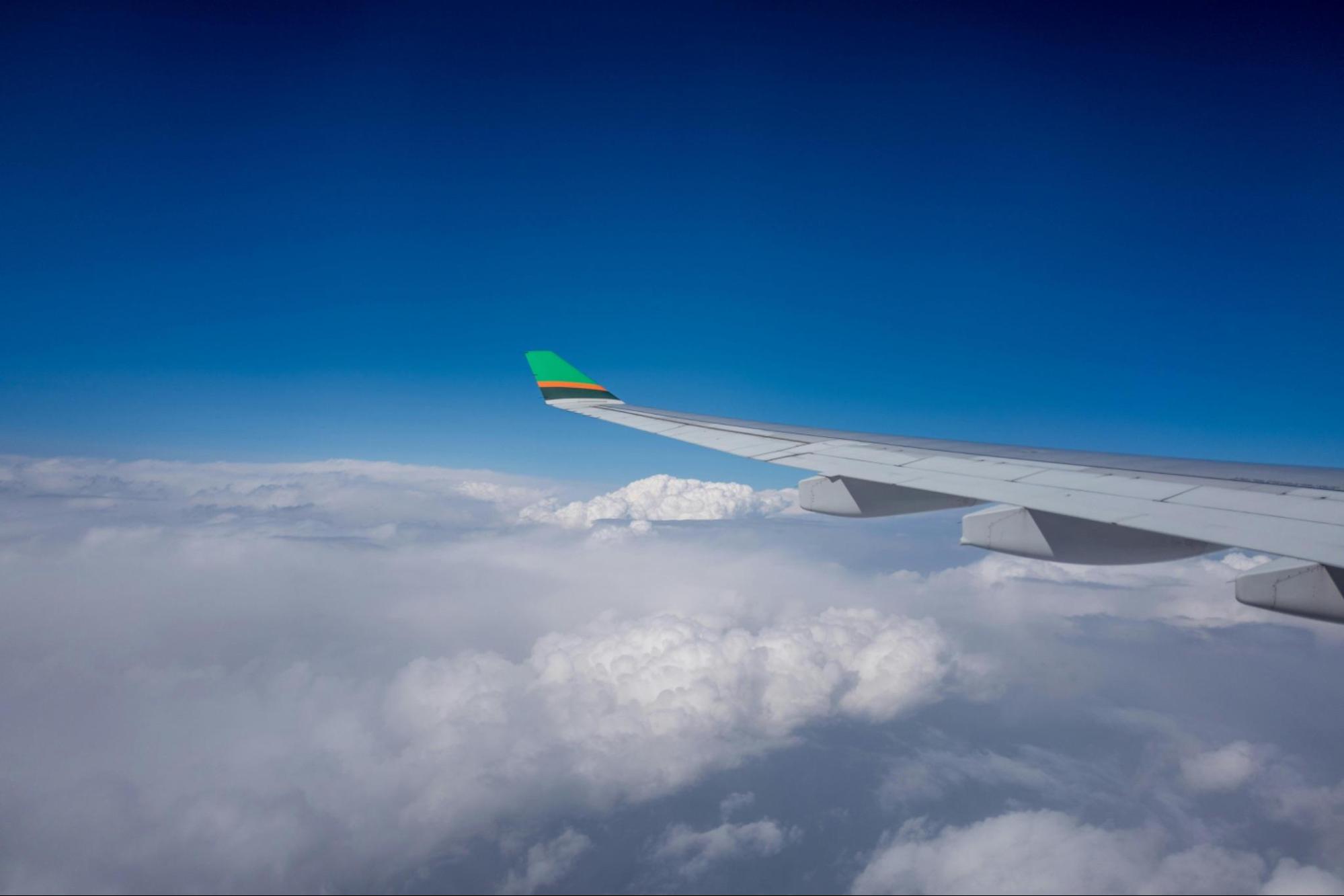
As an airplane climbs higher during takeoff, the surrounding air density decreases, which reduces drag and allows the engines to operate more efficiently. Planes will eventually reach cruising altitude, which is the consistent height above sea level that they maintain during the majority of its flight. Aircraft cruising altitude is carefully determined to minimize air resistance while optimizing engine performance.
For commercial airplanes, the cruising altitude ranges between 30,000 and 42,000 feet. Long-haul flights such as the Boeing 737-800 typically cruise between 33,000 and 41,000 feet, while the Airbus A330-200 flies around 31,000 to 41,000 feet. However, planes with shorter routes or heavier loads may cruise a bit lower.
The advantages of flying at high cruising altitude
A high aircraft cruising altitude is not chosen at random. It actually has several benefits for the airplane, which we will explore below.
The first advantage of flying higher is better fuel efficiency at high altitude. Commercial airplane engines are most efficient when they are at a higher altitude due to the reduced air resistance and more favourable wind conditions. The higher in the air you go, the less dense or thinner the air is. This means the wings can generate just enough lift to counter the plane’s weight. There is also less drag on the airplane, allowing it to fly at a faster speed at the same thrust setting, resulting in better fuel efficiency.

Flying thousands of feet above the ground also means that airplanes can avoid weather conditions such as heavy rains and high winds. These phenomena typically happen in the troposphere, or the atmospheric layer closest to the ground. Airplanes fly higher, in the stratosphere, where there are less weather disturbances. This also means they can avoid other airborne traffic, such as light aircraft, helicopters, as well as insects and birds.
Another major advantage of high aircraft cruising altitude is the ability to minimize turbulence. While turbulence can happen at any altitude, they are likely to occur during ascent and descent. Much of the turbulence associated with weather systems can be avoided above 35,000 feet, which is why commercial airliners prefer to climb above storms and remain there. The exception is towering thunderstorms that can reach up to 50,000 feet. When this happens, the aircraft may have to navigate around the storm or pass through a less severe section.
Flying at higher altitudes also reduces the risk of bird strikes. Most bird collisions happen during takeoff and landing, when aircraft are still low to the ground. The most famous example is the 2009 “Miracle on the Hudson", when Captain “Sully" Sullenberger safely ditched an Airbus A320 after a bird strike caused total engine failure. By climbing above 10,000 feet, airplanes significantly decrease the likelihood of encountering birds, making the skies safer for everyone on board.
Impact on aircraft performance
Besides optimizing fuel efficiency and avoiding weather disturbances, flying at high altitudes also plays a crucial role in aircraft performance. Several factors determine how well an aircraft can climb, cruise, and maintain stability at different altitudes.
Air density
At lower altitudes, air density decreases, reducing the available oxygen for engine combustion. Subsequently, the lift produced by the plane’s wings and the thrust from the engines are reduced. This is why jet engines can perform better at high altitudes with thinner air.
Service ceiling
Service ceiling refers to the maximum altitude where an airplane can maintain steady, level flight at a climb rate of at least 100 feet per minute. This ceiling is dictated by engine performance, wing design, and how the aircraft handles in thin air. Most commercial airplanes have service ceilings between 39,000 and 41,000 feet. In terms of the European newer designs, some long-range, twin-engine widebodies have slightly higher service ceilings. The Airbus A350 has quickly become a favorite among many airlines worldwide, with the -900 having a service ceiling of 43,100 feet and the -1000 at 41,450 feet.
Density altitude
Density altitude is a measure of air density compared to standard atmospheric conditions. This value affects climb rate and cruising altitude, determining how quickly an aircraft can reach safer, thinner air.. High-density altitudes, such as in mountainous regions, makes takeoffs and landings more critical.
Cabin pressure and passenger safety

At typical cruising altitudes of 30,000–38,000 feet, outside air pressure drops to 0.2-0.3 atm and cannot sustain human life. Subsequently, aircraft cabins are pressurized to 5,500–8,000 feet (0.7–0.8 atm), providing safety for passengers. While generally tolerable for healthy adults, extended exposure to the lower end of this cabin pressure range can cause mild altitude-related symptoms such as headaches, fatigue, muscle cramps, and stomach discomfort due to reduced blood oxygen levels.
Research suggests that maintaining cabin pressure closer to 6,000 feet can improve comfort on long flights, which is why newer long-range aircrafts like the Boeing 787 are designed with higher cabin pressure to enhance passenger well-being.
Commercial plane vs. fighter jet altitudes: How do they compare?
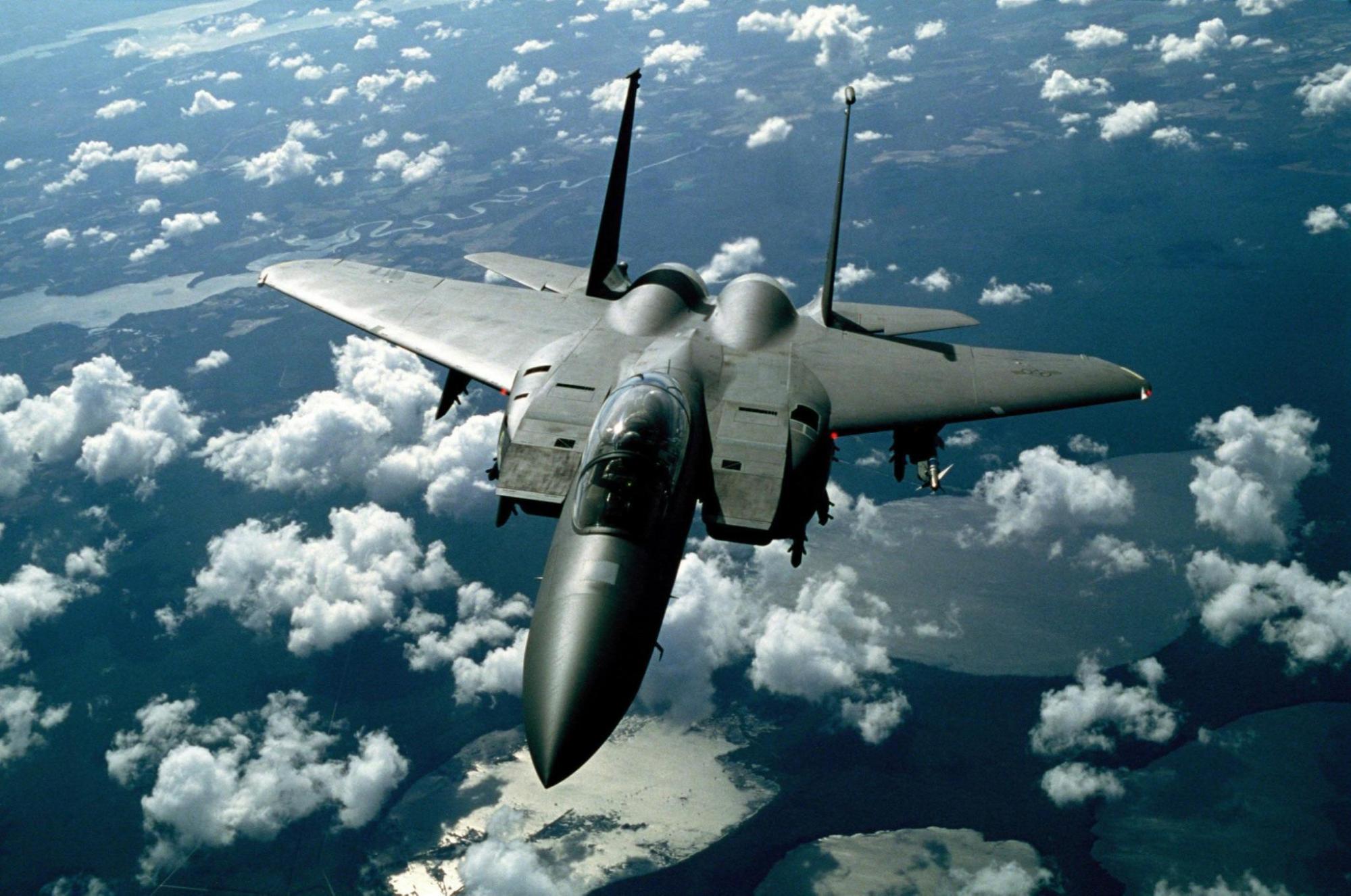
How about fighter jets altitude? As you may have guessed, fighter jets fly at higher altitudes than commercial aircrafts. Military fighter jets have advanced engines and aerodynamic designs for them to operate at extreme altitudes. These aircraft can reach altitudes far beyond commercial airplanes, usually 50,000 to 65,000 feet or more. At this range, military jets can have tactical advantages in surveillance and combat, while being able to maintain high speeds and maneuverability.
Flying at high altitudes helps military aircraft stay less visible to radar. At these heights, specialized oxygen systems are necessary to protect pilots from hypoxia caused by thinner air. Because many military jets travel at supersonic speeds, they also rely on durable yet lightweight materials to withstand intense aerodynamic forces. Their rapid climb capabilities also allow them to reach extreme altitudes quickly, improving overall mission efficiency. Operating in such demanding conditions requires constant monitoring to ensure the aircraft remains stable, responsive, and safe.
One remarkable air fighter jet is the McDonnell Douglas F-15 Streak Eagle. Between January 16 to February 1, 1975, it broke eight time-to-climb world records, reaching an altitude of 98,425 feet in just 3 minutes and 27.8 seconds from brake release at takeoff. It then soared to nearly 103,000 feet before descending.
Another fighter jet worth mentioning for its impressive altitude is Dassault’s Mirage F1, which entered the French Air Force in 1974. It could reach a maximum altitude of 60,700 feet, which was significantly higher than the US F-22 Raptor and F-35A Lightning 2. While a jet’s altitude does not define its overall worth, it’s impressive that an older aircraft can surpass the most advanced jets in the US at that time.
Final Thoughts
Reaching aircraft cruising altitude is advantageous in terms of fuel efficiency and minimizing weather disturbances. Cabin pressurization is another important factor to consider for commercial airplanes to ensure passenger comfort and safety when flying at high altitudes. Meanwhile, fighter jet altitudes are much higher to assist them during surveillance and combat.
In conclusion, planes do not just fly at random heights in the skies for no reason. The altitude at which planes fly is determined by various factors, such as aircraft type, purpose, and atmospheric conditions. Engineers also aim to increase cruise performance and ensure smooth, fuel-efficient flights at cruising altitude. As aircraft engineering technology continues to shape air travel, ensuring passenger safety and efficiency while soaring high becomes a key focus of their advancements.